
A Guide to Plumbing Valves
A plain-English rundown of the plumbing valves you'll come across on a typical domestic system, and what each one does.
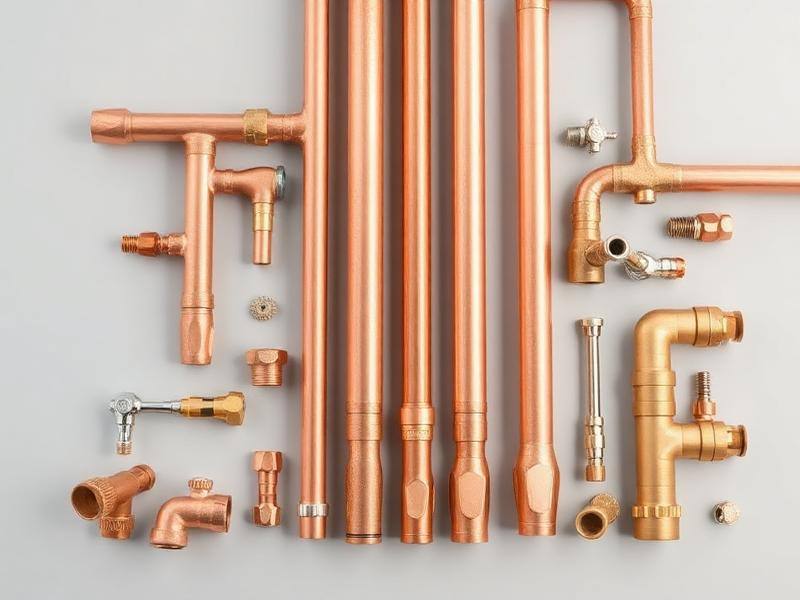
A plumbing system relies on a handful of valve types to isolate, control and protect water flow. This guide explains what each common valve does, where it is typically fitted, and how it differs from the others, so you can identify the right part for the job.
Isolation and service valves
An isolation valve, often called a service valve, is a small quarter-turn valve fitted to the pipe feeding an individual appliance — a tap, toilet, washing machine or dishwasher. Turning the slotted screw a quarter turn with a screwdriver or flat blade shuts off that one appliance, without needing to isolate the whole property.
- Fitted close to the appliance so it can be serviced or replaced without draining the whole system
- Usually straight or angled 15mm fittings with a compression or push-fit tail
- Standard practice on all new tap, WC and appliance connections
Gate valves
A gate valve controls flow with a metal gate that lowers into the flow path as a handwheel is turned. Older gate valves were widely used as the main isolation point on a cold water system, but they are prone to seizing or failing to shut off fully if not operated periodically, and they give no visual indication of whether they are open or closed at a glance.
Gate valves are still supplied for like-for-like replacement and some specific applications, but ball valves have largely replaced them as the preferred isolation valve on modern domestic installations because of their more reliable shut-off.
Ball and lever valves
A ball valve uses a bored ball inside the valve body — turning the lever 90 degrees rotates the ball to either align with the pipe (open) or block it (closed). This gives a clear visual indication of the valve's state and a reliable, low-maintenance shut-off, which is why ball valves are now the standard choice for main stopcocks and isolation points on new work.
- Full-bore ball valves cause minimal restriction to flow when open
- Lever handle shows at a glance whether the valve is open or closed
- Common as the main incoming stopcock and on larger isolation points around a system
Check (non-return) valves
A check valve, also called a non-return valve, allows water to flow in one direction only. It is used to prevent backflow that could contaminate a clean supply, or to stop water draining back the wrong way through a pump or appliance connection.
- Protect the mains supply from contamination via appliances such as washing machines and outside taps
- Fitted on pump inlet and outlet pipework to maintain prime and prevent backflow
- Available as simple spring-loaded in-line valves or combined with other fittings such as double check valve assemblies
Drain cocks
A drain cock (or drain-off valve) is a small valve fitted at the lowest point of a pipe run or system, with a hose connection so the system can be emptied for maintenance or repair. Central heating systems and cold water systems typically have one or more drain cocks positioned to allow a full or partial drain-down.
- Fitted at the lowest accessible point of a circuit
- Opened with a hose attached to direct water safely away, usually outside or to a drain
- Worth checking periodically, as older drain cocks can seize or weep if rarely used
Thermostatic radiator valves (TRVs)
A thermostatic radiator valve senses room temperature and automatically adjusts the flow of hot water into an individual radiator, allowing each room to be set to a different temperature. TRVs are fitted on the flow side of a radiator, with a lockshield valve on the return used to balance the system.
TRVs are covered in more detail, including sizing, fitting positions and where not to use one, in our dedicated guide.
Choosing the right valve for the job
| Valve type | Main purpose | Typical location |
|---|---|---|
| Isolation / service valve | Shut off a single appliance | Under sinks, at WCs, behind appliances |
| Gate valve | General on/off flow control (legacy) | Older cold water systems |
| Ball / lever valve | Reliable main or branch isolation | Main stopcock, system isolation points |
| Check (non-return) valve | Prevent backflow | Outside taps, pump lines, appliance connections |
| Drain cock | Empty a system for maintenance | Lowest point of a heating or water circuit |
| TRV | Automatic per-room temperature control | Radiator flow connection |
As a general rule, use a ball valve where reliable, infrequent isolation is needed; a service valve where an individual appliance needs quick local isolation; a check valve wherever backflow could be a risk; and a TRV where individual room control is wanted on a heating system.
Shop the parts for the job
Frequently asked questions
- What's the difference between a gate valve and a ball valve?
- A gate valve closes with a sliding gate and can seize or fail to shut off fully over time, while a ball valve uses a rotating bored ball that gives a more reliable, low-maintenance shut-off and a clear open/closed indication.
- Where should a check valve be fitted?
- Wherever backflow could be a risk to a clean water supply, such as at outside taps, washing machine connections and pump installations. The category of backflow protection needed depends on the fluid risk at that point.
- Do I need a drain cock on a central heating system?
- Yes, a drain cock at the lowest point of the system allows it to be drained for repairs, alterations or flushing.
- Is a TRV the same as a normal radiator valve?
- No. A standard manual valve or lockshield only opens or restricts flow by a fixed amount set by hand, while a TRV automatically adjusts flow in response to the room temperature.
Shop the products in this guide
Plumb Supply Team
Practical buying information from the Plumb Supply team.