
Push-Fit vs Compression Fittings: Which Should You Use?
How push-fit and compression fittings differ, and how to decide which is the right choice for a given job.
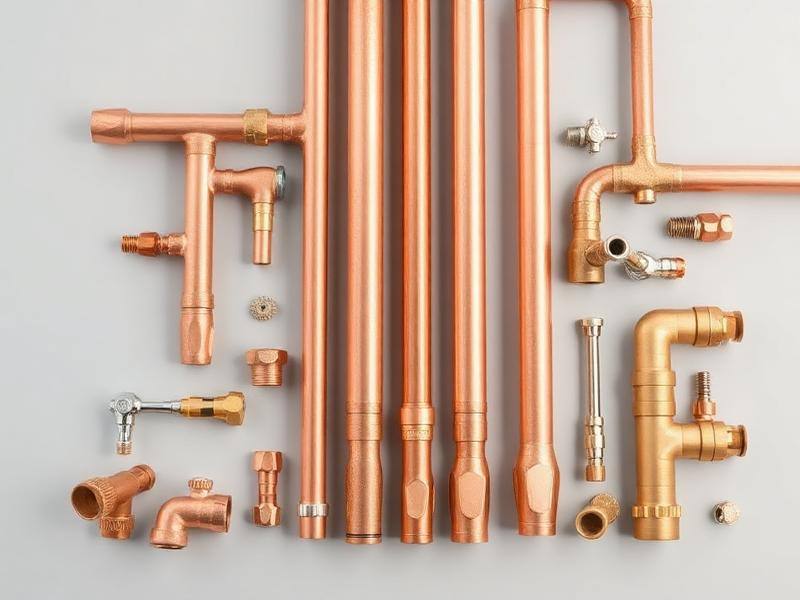
Push-fit and compression fittings are the two most common ways of joining pipe without soldering. Both are reliable when used correctly, but they suit different situations. This guide explains how each works, where they perform well, and where one is clearly the better choice.
How push-fit fittings work
A push-fit fitting joins pipe by pushing it into a body containing a stainless steel grab ring and an O-ring seal. The grab ring bites onto the pipe wall to resist it pulling out, while the O-ring provides the watertight seal. No tools, heat or jointing compound are needed — the pipe simply needs to be cut square, deburred and, on plastic pipe, fitted with a pipe insert or liner where the manufacturer specifies one.
Push-fit systems work on copper, PEX and polybutylene pipe, and most ranges are interchangeable across pipe types provided the correct pipe insert is used. Many fittings also demount using a small release tool or collar, which is useful where a joint may need to be revisited.
How compression fittings work
A compression fitting uses a brass nut and an olive — a small brass or copper ring — that sits over the pipe end. Tightening the nut compresses the olive onto the pipe, forming a mechanical seal against the fitting body. It is done with two spanners: one to hold the fitting body still and one to turn the nut.
Compression joints have been the standard mechanical joint on copper pipework for decades and are well understood by every plumber and inspector. They can be taken apart and remade, though the olive should generally be renewed if a joint is disturbed and re-tightened, since a used olive does not always reseat reliably.
Push-fit vs compression at a glance
| Factor | Push-fit | Compression |
|---|---|---|
| Tools needed | None — hand pressure only | Two spanners |
| Speed | Very fast | Slower, but still quick |
| Pipe types | Copper, PEX, polybutylene (with insert) | Copper (and some plastic with adaptors) |
| Reusable | Yes, with release tool | Yes, olive usually renewed |
| Cost per joint | Generally higher | Generally lower |
| Visual acceptance | Plastic body less traditional-looking | Brass, familiar trade appearance |
| Access needed for future work | Demountable with the right tool | Demountable with two spanners |
Advantages and disadvantages of each
Push-fit advantages
- Fast to fit, which matters on repair work or when access is awkward
- No naked flame, so useful where hot works are restricted or impractical
- Works across mixed pipe materials with the right inserts
- Consistent joint quality regardless of individual skill with a spanner or torch
Push-fit disadvantages
- Fittings cost more per joint than compression equivalents
- The O-ring seal can be more sensitive to pipe damage, ovality or poor deburring
- Some trades and specifications still prefer soldered or compression joints for concealed or high-value work
Compression advantages
- Lower cost per fitting, particularly useful on larger jobs
- Long track record and wide familiarity across the trade
- Robust mechanical joint that tolerates a wide range of site conditions
Compression disadvantages
- Slower to fit and requires two spanners and clear access on both sides of the fitting
- Over-tightening can distort the pipe or crack the olive; under-tightening leaves a weeping joint
- Less practical in very tight spaces where a spanner cannot be swung
Accessibility, inspection and maintenance
Both joint types should be left accessible wherever practical, rather than buried in a wall or under a floor with no means of inspection. Most manufacturers state that push-fit and compression fittings should not be fully concealed without an access point, since even a well-made mechanical joint can develop a slow weep over time.
Maintenance is straightforward for both. Push-fit joints can be pulled apart with the correct release collar once the pipe is depressurised; compression joints need the nut loosened with a spanner, and it is good practice to fit a new olive when remaking the joint rather than reusing the old one.
Typical use cases
Push-fit fittings are widely used for domestic first and second fix pipework, boiler and cylinder connections where speed matters, repairs and alterations to existing systems, and situations where soldering is impractical, such as near insulation or timber. Compression fittings remain common on exposed pipework, visible runs where a traditional brass finish is wanted, and any job where the lower cost per joint matters across a large number of connections.
Professional considerations
For gas pipework, only fittings and methods specifically approved for gas use may be fitted, and gas installation work must be carried out by a Gas Safe registered engineer. On water systems, always check the fitting is rated for the pressure, temperature and pipe material in use, and follow the manufacturer's stated deburring, insertion depth and pipe insert requirements — most joint failures on push-fit systems trace back to a poorly prepared pipe end rather than a fault with the fitting itself.
Shop the parts for the job
Frequently asked questions
- Are push-fit fittings as reliable as compression fittings?
- Both are reliable when fitted correctly. Push-fit relies on a clean, square, deburred pipe end and the correct insert; compression relies on the correct tightening torque and a sound olive. Neither should be buried without an access point.
- Can I mix push-fit and compression fittings on the same pipe run?
- Yes. Many plumbers use push-fit for speed on awkward sections and compression or soldered joints on exposed or visible pipework within the same installation.
- Do push-fit fittings work on plastic barrier pipe?
- Most ranges do, provided the correct pipe insert or liner is fitted inside the plastic pipe before pushing it into the fitting — check the manufacturer's instructions for the specific pipe type.
- Can a compression fitting be reused after taking it apart?
- The fitting body can be reused, but the olive should normally be renewed, since a compressed olive does not always form a reliable seal a second time.
Shop the products in this guide
Plumb Supply Team
Practical buying information from the Plumb Supply team.