
Renewable & Low-Carbon Heating
6 categories · 22 product ranges
Air source and ground source heat pumps, heat pump cylinders, solar PV and solar thermal, MVHR, EV charging and battery storage. Products for installers moving into low-carbon heating and for retrofit projects that need a system designed around lower flow temperatures — available online at trade prices with nationwide UK mainland delivery.
Shop renewable & low-carbon heating by category
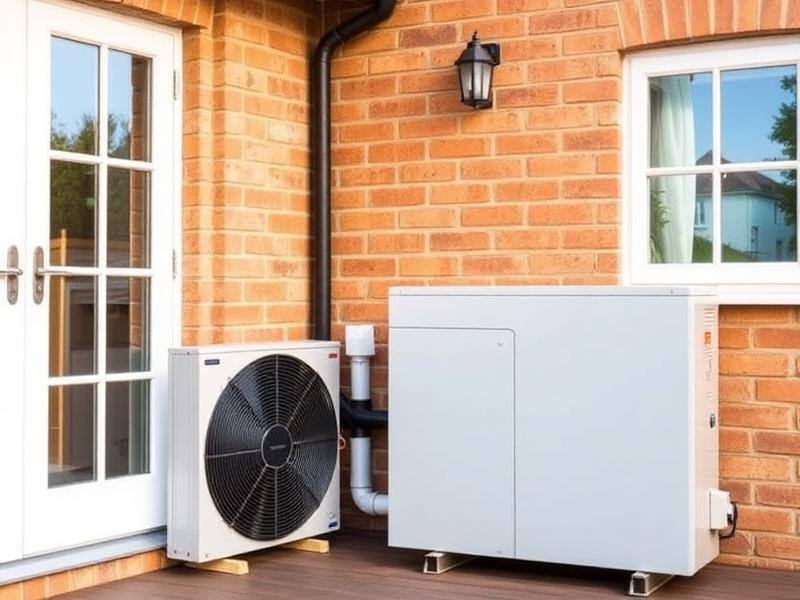
Heat Pumps
- Air Source Heat Pumps
- Ground Source Heat Pumps
- Hybrid Heat Pumps
- Heat Pump Cylinders
Solar
- Solar PV Panels
- Solar Thermal
- Inverters
- Mounting Systems
Hot Water Cylinders
- Unvented Cylinders
- Vented Cylinders
- Twin Coil Solar
- Buffer Tanks
MVHR
- MVHR Units
- MVHR Ducting
- Grilles & Valves
EV Charging
- Wall Chargers
- Tethered Chargers
- Charging Cables
- EV Accessories
Battery Storage
- Home Batteries
- Hybrid Inverters
- Battery Accessories
Featured in renewable & low-carbon heating
Product listings are temporarily unavailable
We can’t load live prices and stock for this range right now. Everything else on the site works normally — browse the categories below, or send us your requirements and our team will price it up for you.
Need it today? Email sales@plumbsupply.co.uk.
Shop renewable & low-carbon heating by brand




Buying renewable & low-carbon heating from Plumb Supply
Designing for lower flow temperatures
A heat pump is only as good as the emitters it feeds. Where a boiler ran at 70°C, a heat pump typically runs at 35–50°C, so radiators usually need upsizing and pipework needs checking for flow rate. Underfloor heating is the natural partner because of its large surface area. Do the heat loss room by room rather than scaling from the old boiler output, and plan the cylinder at the same time — heat pump cylinders use larger coils to transfer heat at lower temperatures.
Solar, storage and EV charging
Solar PV pairs well with a heat pump because the loads overlap for much of the year, and a hybrid inverter with battery storage lets a household shift generation into the evening. Solar thermal remains a straightforward way to cut water heating costs where roof space is limited and a twin coil cylinder is already planned. EV chargers are increasingly part of the same conversation, and specifying them alongside the electrical work avoids a second visit and a second set of cable runs.
Ventilation and airtightness
As properties get tighter, ventilation stops being optional. MVHR recovers heat from extracted air and supplies filtered fresh air to habitable rooms, which suits new build and deep retrofit. Duct layout matters more than the unit: keep runs short, use rigid ducting where possible, and commission the system properly so the balance matches the design.
Renewable & Low-Carbon Heating — frequently asked questions
What renewable products do you supply?
Air source and ground source heat pumps, hybrid systems, heat pump and solar cylinders, solar PV and solar thermal, inverters, MVHR units and ducting, EV chargers and battery storage.
Do heat pumps work with existing radiators?
Sometimes, but not always. Because heat pumps run at lower flow temperatures, radiators often need upsizing. A room-by-room heat loss calculation will confirm what can stay.
Can I order renewable products on a trade account?
Yes — trade pricing applies across the renewables range, and larger installations can be priced through the project quote form.
Do I have to replace all my radiators?
Not always. Rooms already fitted with generously sized radiators may be adequate at the design flow temperature; others will need upsizing. The heat-loss calculation identifies which rooms fall short.
Read the full guide: Air Source Heat Pumps Explained: Sizing, Radiators and CylindersCan a heat pump run alongside a boiler?
Yes — a hybrid arrangement lets the heat pump cover most of the season while the boiler handles peak cold spells or hot water, which suits properties with high heat loss.
Read the full guide: Air Source Heat Pumps Explained: Sizing, Radiators and CylindersWho should install a heat pump?
A suitably qualified installer, with split systems requiring F-Gas certification. Grant schemes generally require the installer and system design to meet a recognised certification standard.
Read the full guide: Air Source Heat Pumps Explained: Sizing, Radiators and Cylinders